





Levothyroxine and Hashimoto’s: Why Many Women Still Feel Sick
When I was first diagnosed with Hashimoto’s, I believed the solution was simple: take levothyroxine hormone replacement medication, normalize thyroid labs and start feeling better.
However, that is not what happened.
My THS, T3 and T4 labs improved for a while. Yet, not long afterwards many symptoms returned. Fatigue stayed. Brain fog continued. My digestion became worse.
I started asking a difficult question: Why do so many women still feel unwell even when they take thyroid hormone replacement such as levothyroxine correctly?
Through my own journey and years of studying autoimmune disease, I realized something important: Levothyroxine replaces thyroid hormone, yet it does not address the autoimmune process driving Hashimoto’s.
This is why the conversation about Levothyroxine and Hashimoto’s needs to go deeper.
Levothyroxine Treats Hormones but Not the Immune Attack
Levothyroxine is the most commonly prescribed thyroid medication.
It provides synthetic T4, which is one of the hormones normally produced by the thyroid gland.
Doctors prescribe it because many people with Hashimoto’s gradually lose the ability to produce enough thyroid hormone.
Replacing T4 can help regulate metabolism and support basic hormone balance.
However, Hashimoto’s is not primarily a thyroid hormone disorder.
It is an autoimmune condition.
In Hashimoto’s, the immune system mistakenly attacks the thyroid gland. Over time this immune attack damages the thyroid and reduces hormone production.
Levothyroxine treats the result of the disease, not the cause.
This explains why many women taking thyroid medication continue to experience symptoms such as:
• fatigue
• brain fog
• weight gain
• digestive issues
• hair loss
• cold intolerance
• anxiety or mood changes
The medication corrects hormone levels, but the immune system may still be inflamed.
In my book From Pain to Wellness: Overcoming Autoimmune Diseases, an Undisclosed Epidemic, I describe this as treating the smoke while ignoring the fire.
Levothyroxine and Hashimoto's: Understanding the Different Thyroid Medications
Many people believe levothyroxine is the only thyroid medication available. In reality several types exist.
Understanding the differences helps explain why levothyroxine does not work the same way for everyone.
Levothyroxine (T4 only medication)
Levothyroxine contains synthetic T4 hormone. It is a generic medication which means that the pharmaceutical formulation patent expired and different manufacturers can now produce it.
Different pharmaceutical companies offer their own version of Levothyroxine under different brands names in US:
Synthroid
Levoxyl
Tirosint
Unithroid
Once taken, the body must convert T4 into T3, the active thyroid hormone.
If this conversion works properly, levothyroxine can effectively support thyroid hormone balance.
However, not everyone converts T4 into T3 efficiently.
When conversion is poor, symptoms may persist even when TSH and T4 blood tests look normal.
If you are unsure which labs should be evaluated beyond TSH, I explain this in detail in my Hashimoto’s Tests Guide, where I walk through the thyroid markers and nutrient tests that can reveal deeper issues.
Liothyronine (T3 medication)
Liothyronine contains synthetic T3, the active thyroid hormone.
The most common brand is: Cytomel
Because T3 is already active, it does not require conversion.
Some doctors prescribe a combination of T4 and T3 when patients continue to experience symptoms on levothyroxine alone.
However, T3 works quickly and can affect heart rate and energy levels, so dosing must be carefully monitored.
Natural desiccated thyroid (NDT)
Natural desiccated thyroid medications come from porcine thyroid glands.
These medications contain both T4 and T3, along with small amounts of other thyroid hormones.
Common brands include:
Armour Thyroid
NP Thyroid
Nature Throid
WP Thyroid
Some patients report feeling better on NDT because it provides multiple thyroid hormones. However, dosing can be less predictable and not every doctor is comfortable prescribing it.
Again, this shows why the conversation about levothyroxine and Hashimoto’s is often more complex than simply replacing one hormone.
Levothyroxine and Hashimoto's: Why T4 Must Convert to T3
T4 is considered an inactive hormone.
The body must convert T4 into T3, which is the hormone that actually regulates metabolism, body temperature, brain function, and energy production.
This conversion occurs through enzymes called deiodinases.
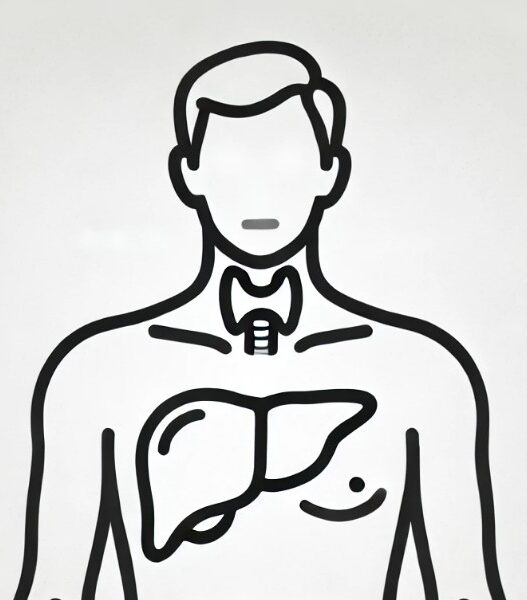
The process mainly takes place in the:
- liver
- gut
- muscles
- brain
If conversion works properly, T4 medication can supply enough hormone for the body. However, when conversion is impaired, a person may have normal TSH and T4 levels while still experiencing hypothyroid symptoms.
A study published in The Journal of Clinical Endocrinology and Metabolism found that many patients taking levothyroxine continue to experience symptoms despite normal thyroid lab results.
Levothyroxine and Hashimoto's: Causes of Poor T4 to T3 Conversion
Several physiological factors can interfere with thyroid hormone conversion.
Understanding these factors is crucial when evaluating levothyroxine and Hashimoto’s treatment outcomes.
Chronic inflammation
Inflammatory cytokines can suppress the enzymes responsible for converting T4 to T3.
Since Hashimoto’s is an inflammatory autoimmune condition, ongoing immune activity may reduce conversion efficiency.
Research suggests that inflammatory cytokines can alter thyroid hormone metabolism by interfering with deiodinase activity, which may reduce T4 to T3 conversion in some situations. Thyroid Hormones, Oxidative Stress, and Inflammation – PMC
Iron deficiency
Iron is essential for thyroid hormone metabolism.
Many women with Hashimoto’s have low ferritin levels, especially when digestive issues or autoimmune gastritis are present.
It helps support thyroid peroxidase, an enzyme needed to make thyroid hormones. When iron is low, thyroid hormone production may be affected, and some women may continue to feel tired, cold, weak, or foggy even while taking thyroid medication.
his matters even more in women with Hashimoto’s and autoimmune gastritis, where low ferritin and poor absorption are common. Relationship between Iron Deficiency and Thyroid Function: A Systematic Review and Meta-Analysis – PubMed
Selenium deficiency
Selenium plays a critical role in thyroid hormone metabolism.
The enzymes responsible for converting T4 into active T3, called deiodinases, are selenium dependent proteins.
When selenium levels are low, this conversion process may become less efficient.
Selenium also helps protect the thyroid gland from oxidative stress during hormone production.
Zinc deficiency
Zinc supports thyroid hormone production and receptor activity.
Without adequate zinc, cells may not respond properly to thyroid hormones even when blood levels appear normal.
Chronic stress
High cortisol levels can reduce T4 to T3 conversion and increase reverse T3, an inactive hormone that blocks T3 activity.
This response is part of the body’s stress adaptation mechanism. However, chronic stress may keep the body stuck in this slowed metabolic state.
Gut dysfunction
The gut plays a major role in thyroid hormone metabolism.
Conditions such as bacterial overgrowth, gut permeability, or digestive inflammation can interfere with nutrient absorption and hormone conversion.
Approximately 70 percent of the immune system resides in the gut, which means gut health also influences autoimmune activity.
Thyroid Hormone Medication Does Not Address Root Triggers in Hashimoto's
Even when thyroid hormone levels improve, the immune system may still be attacking the thyroid gland.
Several triggers commonly contribute to autoimmune thyroid disease:
– gut imbalance
– nutrient deficiencies
– chronic stress
– infections
– environmental toxins
If these triggers remain unaddressed, symptoms may persist despite medication.
Many people spend years adjusting thyroid medication doses without exploring these deeper drivers.
Most of people spend a lot of money trying supplements and diets that worked for other people with not too much success.
This is why the discussion around levothyroxine and Hashimoto’s should include a broader functional view of health.
Levothyroxine and Hashimoto's Require a Broader Approach
Levothyroxine can be helpful and often necessary.
However, thyroid medication alone rarely resolves the full picture of autoimmune thyroid disease.
Improving health with Hashimoto’s often requires addressing multiple areas such as:
- gut health
- nutrient status
- stress management
- sleep quality
- environmental exposures
- inflammation
When these factors improve, many women notice better energy, improved digestion, and clearer thinking.
Medication may still play a role, yet it becomes only one part of a larger strategy.
Levothyroxine and Hashimoto's: The Hidden Cost of Guessing With Supplements
One pattern I see repeatedly in Hashimoto’s communities surprises me.
Many people hesitate to invest in functional testing because they believe tests are expensive.
However, at the same time, they often spend hundreds or even thousands of dollars trying supplements that worked for someone else.
In Facebook groups I frequently see questions like:
“What supplement helped you?”
“What should I take for Hashimoto’s?”
While these questions are understandable, they often lead to guesswork.
One person may improve with selenium. Another might need iron. Someone else may actually have gut bacterial overgrowth or chronic stress driving their symptoms.
Without understanding what is happening inside the body, supplements often become a long process of trial and error.
Over time this approach can cost far more than testing.
Many people experience temporary symptom relief with a supplement, which feels encouraging at first. However, if the deeper autoimmune trigger is not addressed, symptoms often return.
Sometimes they return stronger.
In some cases the immune system continues to stay activated in the background. When this happens, the autoimmune process may progress or even contribute to the development of another autoimmune condition.
This is why focusing only on symptom relief is rarely enough.
Final Thoughts on Levothyroxine and Hashimoto's
If you are taking levothyroxine and still struggling with symptoms, you are not alone.
Many women feel frustrated when lab numbers improve but daily life does not.
Understanding the relationship between levothyroxine and Hashimoto’s can help explain why this happens.
Hashimoto’s is an autoimmune condition involving the immune system, the gut, nutrient balance, inflammation, and stress. Thyroid medication replaces hormones, yet it does not address the underlying triggers.
Looking at the full picture can often reveal the missing pieces.
I share much more about this journey and the deeper drivers of autoimmune disease in my book From Pain to Wellness: Overcoming Autoimmune Diseases, an Undisclosed Epidemic.
You can also find blogs and other information about autoimmune diseases, in particular about Hashimoto’s and Autoimmune Gastritis in my website: https://aipwellnessjourney.com